
In today’s rapidly evolving digital landscape, artificial intelligence (AI) is no longer a futuristic concept but a present-day reality, deeply integrated into the daily lives of millions. As an optometrist, you might be wondering how this technological shift impacts your practice and, more specifically, how an AI call assistant can revolutionize your patient interactions. The good news is, your patients are already comfortable with AI, making its adoption in your office a seamless and beneficial transition.AI is Everywhere, Including Your Patients’ Lives
Consider this: as of 2025, generative AI usage in the USA is widespread and growing at an unprecedented rate. Half of U.S. adults regularly use large language models like ChatGPT and Gemini. Nearly 40-45% of American adults aged 18-64 have experimented with generative AI tools, with even higher usage among younger demographics and workplace professionals. In fact, 61% of American adults have used AI in the last six months, and about one in five (20%) rely on it daily. This marks one of the fastest technology adoptions in history.
What does this mean for your optometry practice? It means your patients are already interacting with AI in their personal, work, and school tasks. They are familiar with its capabilities and, more importantly, they find it acceptable. Introducing an AI call assistant to your office isn’t about pushing new technology on reluctant users; it’s about meeting your patients where they already are – in a digitally-savvy world. The RingIQ.ai Advantage: Never Miss a Call, Never Lose a Patient
One of the most critical aspects of running a successful optometry practice is effective patient communication, particularly when it comes to answering the phone. Missed calls often translate to missed appointments and, ultimately, lost revenue. This is where an AI call assistant like RingIQ.ai truly shines.
While a small percentage (around 4%) of callers might initially feel uncomfortable with AI, the overwhelming majority—a remarkable 96%—are comfortable interacting with an AI call assistant. Compare this to the traditional alternative: voicemail. During business hours, a staggering 80% of callers reject voicemail, and half of those callers who reach voicemail never call back. This represents a significant loss of potential appointments and patient engagement.
By implementing an AI call assistant, you dramatically reduce the chances of patients abandoning their interest in your practice. Your patients can get immediate assistance, whether they’re calling to make an appointment, ask questions about their vision care, or inquire about your practice’s policies. This constant availability and efficient handling of calls lead to higher patient satisfaction and retention. The Always-Available, Expert Agent Your Practice Needs
Imagine having an agent who is always available, 24/7, never takes a sick day, and is consistently well-trained on every aspect of your optometry practice. This is precisely what an AI call assistant provides.
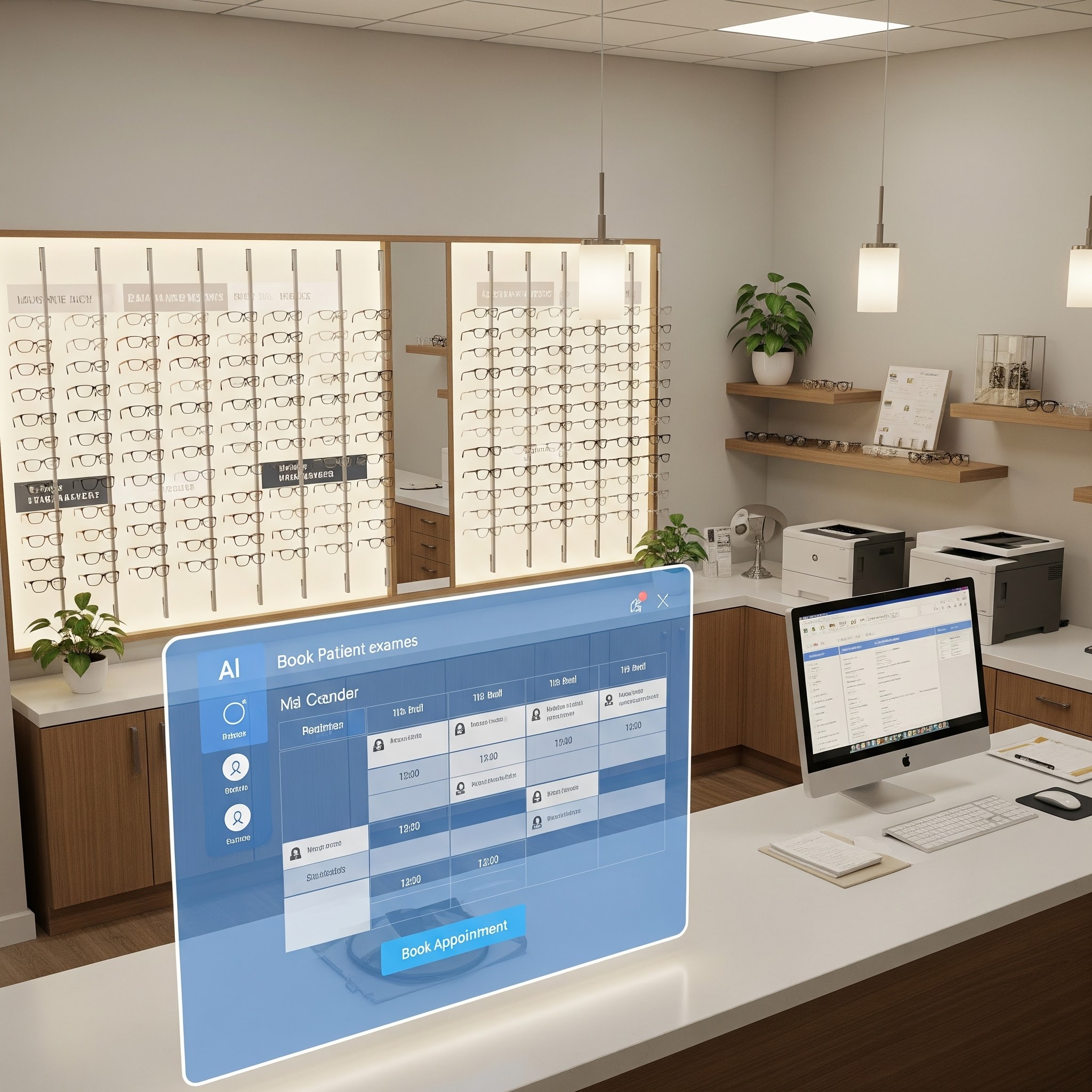
An AI call assistant can be seamlessly integrated with your doctor’s electronic health records (EHR/PMS) program, your office policies and procedures, and your practice’s website. This means it has instant access to all the information needed to answer patient questions accurately and efficiently. From appointment scheduling and prescription inquiries to details about insurance and specific vision care services, the AI assistant can provide comprehensive and consistent responses.
This level of integration and knowledge empowers the AI to deliver personalized service, addressing patient needs with precision and speed. It frees up your human staff to focus on more complex cases and in-person patient interactions, enhancing overall office efficiency and improving the quality of care.
Conclusion
The evidence is clear: AI is not just a trend; it’s a transformative tool that can significantly benefit your optometry practice. By embracing an AI call assistant, you’re not only adopting cutting-edge technology but also catering to your patients’ evolving expectations. With widespread AI acceptance among the public, the proven effectiveness of AI call assistants like RingIQ.ai, and the undeniable benefits of an always-available, expertly trained agent, integrating AI into your practice’s communication strategy is a smart move for modern optometry. It’s time to let AI help you answer the phone, streamline appointments, and provide exceptional vision care, ensuring your practice thrives in the digital age.
